
For a long time, housing was treated as a private matter. You bought a place, closed the door, and handled life mostly on your own. That model worked for many people, but it is no longer the only option. Today, more individuals and families are actively choosing a different approach. They want connection without pressure, privacy without isolation, and a lifestyle that feels supportive rather than fragmented.
This is where community living comes in. It is not a trend built on marketing language. It is a response to how people actually want to live. When done well, community living creates environments where daily life feels easier, safer, and more connected. Understanding the real benefits helps people decide whether this lifestyle fits their needs and values.
What Is Community Living
Community living refers to residential environments designed to encourage interaction, shared responsibility, and a sense of belonging among residents. Unlike isolated housing, these communities are planned with people in mind rather than just buildings, reflecting how modern communities are designed.
Community living does not mean giving up independence. Residents still have private homes or personal spaces. The difference lies in the shared elements. These may include common areas, walkable layouts, shared amenities, or organized social spaces that naturally bring people together.
Modern community living can take many forms. Some communities are designed for families, others for professionals, and others for older adults. What connects them is the intention behind the design. The goal is to support daily life through connection, convenience, and thoughtful planning rather than leaving every responsibility to the individual.
The Core Benefits of Community Living
The benefits of community living go beyond simple convenience. They touch emotional, practical, and lifestyle needs that many people feel but do not always know how to address.

Social Connection and a Sense of Belonging
One of the most meaningful benefits of community living is social connection. Humans are social by nature, yet modern life often pushes people into isolation. Long work hours, commuting, and digital communication have replaced many face to face interactions, as shown by research on social connection and modern living.
In a community focused environment, connection happens naturally. Neighbors recognize one another. Casual conversations become part of daily routines. Over time, this creates familiarity and trust. People feel seen, not watched. Known, not intruded upon.
This sense of belonging has a direct impact on emotional well being. It reduces feelings of loneliness and creates an environment where people feel comfortable reaching out, whether for conversation or support.
Practical Support in Daily Life
Community living also offers practical advantages that are often overlooked. Shared environments make it easier to manage everyday responsibilities. This does not mean constant dependence on others. It means knowing support is available when needed.
Simple examples include keeping an eye on each other’s homes, sharing local knowledge, or helping during unexpected situations. These small interactions reduce stress and make daily life feel more manageable.
When people are not carrying every responsibility alone, mental load decreases. That relief allows more energy for family, work, and personal interests.
Safety, Awareness, and Peace of Mind
Safety is another key benefit of community living. Well designed communities create natural awareness. Familiar faces, shared spaces, and regular activity all contribute to environments where unusual situations are noticed quickly.
This type of safety does not rely solely on technology or formal systems. It is built through presence and familiarity. Knowing who belongs in a space creates a quiet sense of security.
For families and individuals alike, this awareness brings peace of mind. It allows residents to feel comfortable at home and confident when they are away.
Better Use of Time and Energy
Life is demanding. Between work, family, and personal responsibilities, time often feels limited. Community living helps streamline daily routines.
Shared amenities reduce the need to travel for basic activities. Thoughtful layouts minimize wasted time. Maintenance and planning are often handled collectively, freeing residents from constant decision making.
This efficiency does not make life smaller. It makes space for what matters. When energy is not spent managing everything alone, people have more capacity for relationships, hobbies, and rest.
Community Living for Different Life Stages
One reason community living continues to grow is its flexibility. The benefits apply across different stages of life.
Families often appreciate the built in social environment. Children grow up seeing familiar faces, while parents benefit from shared understanding and informal support.
Working professionals value convenience and balance. Being part of a community reduces the friction of daily life and creates space to unwind.
Older adults often find comfort in environments where connection is natural and assistance is close without feeling intrusive.
The common thread is not age but lifestyle preference. Community living supports people who value connection, balance, and shared experience.
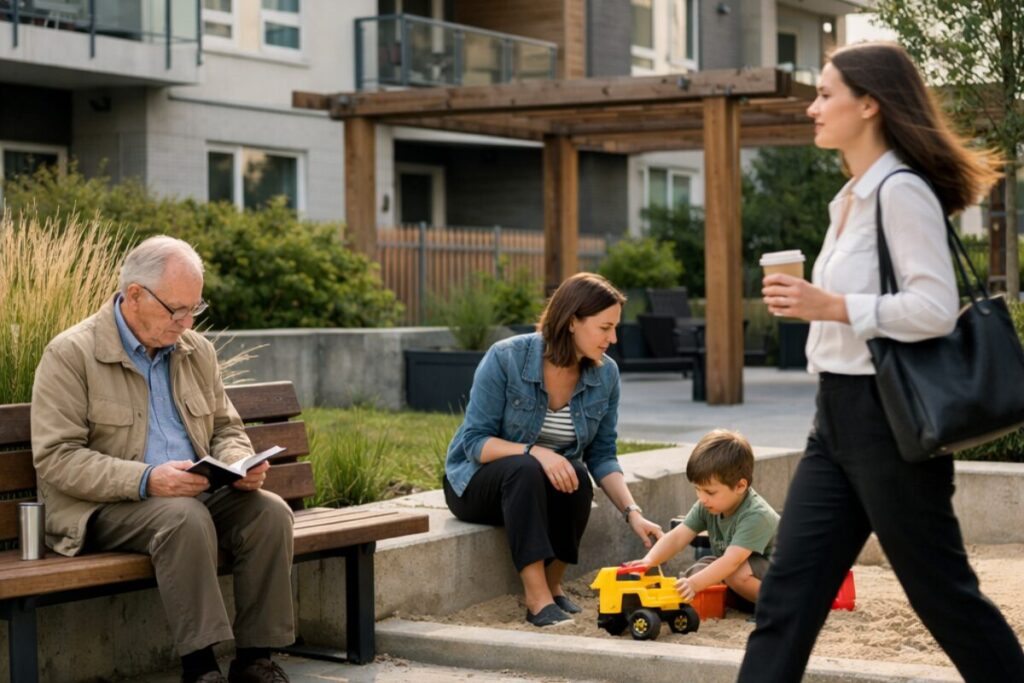
Community Living Compared to Living Independently
A common concern is whether community living limits independence. In reality, the opposite is often true.
Independent living can sometimes mean handling everything alone. That independence can become exhausting rather than empowering. Community living offers choice. Residents decide how involved they want to be while knowing support is nearby.
Privacy remains intact through personal spaces. Boundaries are respected. The difference is that interaction is available rather than forced.
This balance between autonomy and connection is what many people find most appealing once they experience it.
Common Misunderstandings About Community Living
Despite its benefits, community living is often misunderstood.
Some assume it means constant social obligations. In reality, participation is typically optional. People engage at their own comfort level.
Others worry about loss of privacy. Modern community design prioritizes personal space alongside shared areas.
There is also a belief that community living only suits specific groups. In truth, it works for anyone who values thoughtful design and human connection.
Understanding these points helps separate outdated assumptions from how communities actually function today.
Is Community Living Right for Everyone
Community living is not a universal solution, and that is important to acknowledge. People who strongly prefer isolation or highly individualized environments may not enjoy shared settings.
However, for those seeking balance between privacy and connection, community living offers a meaningful alternative. It encourages interaction without pressure and support without dependency.
The decision comes down to lifestyle priorities rather than rules. When those priorities align, the benefits can be significant.
Conclusion
The benefits of community living are not abstract ideas. They are practical, emotional, and deeply human. From stronger social connection to reduced daily stress, community living addresses many challenges people face in modern life.
It offers a way to live that feels supportive rather than isolating and intentional rather than accidental. For many, it is not about changing who they are but about choosing an environment that makes everyday life easier and more fulfilling.
Community living is ultimately a lifestyle choice. Understanding its benefits allows people to make that choice with clarity and confidence.